Aquarium Fish Forum; Everything Aquatic

The original "Everything Aquatic". Based on the vast library of fish/aquarium keeping guru Carl Strohmeyer.

Looking for the perfect gift for your aquarium keeping friend/relative?
AAP AquaRay LED Lights are second to NONE when it comes to the best lights for your freshwater or marine reef aquarium; this includes MH (in tanks under 30") or other LED Systems!

Discussions about "Everything Aquatic";
fresh/saltwater, ponds

We are the ORIGINAL/TRUE “Everything Aquatic” blog & forum board created in 2005 and sponsored by Fish Keeping Guru Carl Strohmeyer based on his decades of experience and research (do not be fooled by the copycat forum board created around 2012)

For Our Forum Board, Please Click Here:
FORUM BOARD

Loading
Most Recent Page Added (see below)


Monday, February 9, 2015

Problems with Aquarium Water - and How to Solve Them


All aquarium keepers experience fish health problems from time to time, however well maintained the tank.
Looking at some of the most common fish health problems and the remedies involved can take some of the guesswork out of fish-keeping.

Ways to avoid health problems…

When adding new fish, aquatics experts advise quarantine for a week in a separate chamber.

Maintenance is key - perform regular water changes of 15-20% and employ an adequate filter to cope with waste levels.

Use a good test kit - regular testing will make sure that you can monitor the elements in the tank before problems start. A master test kit contains tests for a multitude of problems and is great value. Swell UK have a wide range of test kits and aquarium treatments to keep your aquarium in great shape.

Even a slight water problem can cause stress to fish, which makes them more susceptible to infections and diseases. Getting the water quality just right can mean healthier fish for longer.


Common problems


Ammonia

Fish waste is high in ammonia which can have a devastating effect on your fish. It is very common in new aquariums as New Tank Syndrome when the filtration system is not mature enough to cope with the level of waste.

Symptoms:
  • Fish may gasp at the surface
  • White, cloudy water
  • Gills can turn red or purple
  • Dead or dying fish

Treat with a good ammonia remover at the first sign of symptoms. Follow up with regular water testing to monitor levels before a problem occurs.

Algae

Murky green water is often a sign of an abundance of algae. Cells of this natural, hardy plant can quickly spread and reduce visibility, light and oxygen levels in your aquarium.

Algae uses three things to thrive; water, light and nutrients. Of course the water must stay, but reducing the amount of light in the tank can help. Move the aquarium out of direct light and reduce the amount of artificial light to no more than 10 hours per day.

Good maintenance also helps - clean the tank walls and décor regularly to avoid a build-up.

Further Reading/References:
Freshwater Aquarium Basics; Green Water
Aquarium Algae Control

Calcium deficiency

If you have corals, the level of calcium must be monitored to ensure that they have sufficient levels to thrive. Using the relevant test kit will ensure that you can top up as needed so that corals can take what they need from the water. Most reef aquariums aim for a level of 380-420ppm calcium. Corals and invertebrates can quickly deplete levels from the water, so testing is a must for healthy growth.

Symptoms:
  • Slow growth
  • Some corals will appear to shrink back
  • Discolouration of both corals and invertebrates

Use a good calcium supplement along with regular testing to keep levels well maintained. A calcium rich substrate is also a good idea.

Further Information, including importance of calcium for freshwater aquariums: Aquarium Chemistry; Calcium, GH, KH, pH, more

Chlorine

Chlorine is used to make tap water safe for us to drink, however it is not so good for fish. It can cause burns and damage to the fish's delicate gills and mucus membrane which can be fatal.

Symptoms:
  • Gills can develop a white tinge
  • Fish can appear distressed with quick, jerky movements

The best treatment is to add a dechlorinator to tap water during water changes. This not only removes the element but conditions the water too, often incorporating aloe to aid healing. Many dechlorinators are also ideal to use when moving or transporting fish, to lower stress levels. Test for chlorine levels with the relevant test following water changes to ensure a level of 0.

Further Information:
Tap water for my Aquarium or Pond? From Chlorine and Chloramines to Phosphates, Sodium, & TDS

PH level

The pH level is imperative to ensure good water conditions. In all tanks, the pH level is important (although KH/Alkalinity is more important). Marine tanks especially need regular testing to ensure that the pH level is correct. The level indicates how acidic or alkaline the water is. In saltwater aquariums, it's generally more acidic which is beneficial to both reef and marine life.
A pH level of 7 is neutral but if the pH of the water is higher than around 7, it's more alkaline than necessary. Add a suitable buffer to restore the balance and support a healthy tank.

As always good maintenance is key to avoiding a multitude of problems, but regular testing can ensure you are well prepared to meet any issues that may arise. Keeping a good kit of remedies and test kits to hand can help you to tackle problems as they arise!

Further Information: Aquarium Chemistry; pH
Aquarium Chemistry; KH

Further References:

Aquarium Answers; Algae Control


Premium ATI/AAP Sponge Filters

For Aquarium Sponge Filters which are excellent for use in to improve filtration in high bio load and planted aquarium, which in turn lowers nutrients available to algae.

Sponge Filter Use Information
Sponge Filtration; Complete Sponge Filter Use Information


Aquarium or Pond UV Sterilization

True Level One Sterilization can be effective for control or part of a control plan of many types of aquarium algae.


Aquarium Lighting, Information

Aquarium Lighting is a major factor in control of many different algaes including BBA and brown diatom algae

Labels: , , , ,

Tuesday, December 30, 2014

Whats wrong with making Dough in Fish Food?


By Clayn; Co-Founder of Paradigm Fish Foods

Pea Flour for Fish Food, better than too much starchI recently attended a seminar on bariatric surgery with a friend. During this time I learned that after the surgery you are strictly forbidden from eating any form of cooked dough including most bread, pizza crust etc.
I have been told by those that have had the surgery and forgot the rule that you immediately regurgitate the dough. At this point I began thinking about how this might apply to starch bound fish food.

Most of the starch in our foods is from whole ground green pea flour. Dried egg whites are also used to bind our food. Green pea flour contains roughly 21% starch. The use of green pea flour allows us to cut protein and fat without adding excessive starch energy. Our Herbivore food contains roughly 11% starch which is the highest amount of starch found in our line of foods. Green pea flour contains roughly 34% fiber which aids in digestion.
This is very important for herbivores that have a very long digestive tract. After mixing Herbivore is a very thin paste that can literally be poured onto the trays to be dehydrated. The other foods have more body but can easily be spread over the trays to be dehydrated. Once dehydrated the food can be broken into pieces and with a little practice crumbled into smaller pieces for feeding. I can't prove it but it stands to reason that once fed the reverts back to the form it took before dehydration. This is a light paste that can easily be digested.


Fish Foods bound entirely with starch need a minimum of 15% starch to hold the food together but most contain much more.
See How to Read a Fish Food Label for more information.

Increased starch use produces a very thick paste or more than likely a dough. The dough is then extruded at 350 degrees F. to produce a pellet type feed. It stands to reason that once these pellets are fed that they revert back to dough. I have read many comments about filler (excessive use of starch) causing digestion problems in fish. To make this problem worse is the fact that these foods contain very little fiber to aid in passing the doughy mess. Its no wonder fish often suffer from intestinal blockages which causes stress which manifests itself in any number of other different problems.
To answer my question, No there there is nothing wrong with making a little dough. Just don't feed it to your fish!


OTHER ARTICLES BY THE AUTHOR

*Fish Nutrition 101
*Cyanobacteria (Spirulina) and Algae - Pond Grown vs. Naturally Grown
*Probiotics, Prebiotics, Soluble Fiber and Resistant Starch
*How to Read a Fish Food Label & Energy (Fat, Starch and Sugar)


FURTHER SUGGESTED RESOURCES:

Aquarium Fish Nutrition, Reading Fish Food Label
Aquarium Fish Nutrition


Common Aquarium Keeping Myths


Paradigm Fish Foods

• Carnivore, • Omnivore, • Herbivore, • Grow, • Graze (compare to sinking algae wafers)

Aquarium Lighting, Information about T5, Metal Halide, CFL, SHO, PUR, PAR
Aquarium Lighting; Information about T5, Metal Halide, CFL, SHO, PUR, PAR, more

This is THE article for in-depth, researched, and regularly updated information on the subject of aquarium lighting; a MUST READ!

Labels: , , , , ,

Sunday, December 28, 2014

Cyanobacteria (Spirulina) and Algae - Pond Grown vs. Naturally Grown


By Clayn; Co-Founder of Paradigm Fish Foods

Lets take a look at pond grown algae which is fed fertilizer and typically grown under ideal conditions as opposed to naturally occurring algae. I have done quite a bit of reading on the subject over the last few years and have come to the following conclusions.

The protein found in pond grown algae is roughly 50% higher than its naturally occurring counterpart. So our pond grown spirulina with 57% protein would have roughly 30% protein growing in the wild. The main difference being limited food in the form of nitrogen in lakes and rivers.

The fat found in pond grown algae is roughly 1% higher than its naturally occurring counterpart. This difference is not worth noting.

The fiber found pond grown algae is roughly 13% lower than its naturally occurring counterpart.

The minerals/ash found pond grown algae is roughly 2% lower than is naturally occurring counterpart. This makes sense because a lake for example would contain more minerals for the algae to absorb.

Lets assume the moisture content in both is 10%.

Using analysis from this Article on growing duckweed we can start plugging in some average numbers. Yes I know duckweed is not algae but aquatic plants use nutrients in the same way so it is relevant. In the past I have found algae analysis that bears this out.


Pond Grown Duckweed

39% Protein
5% Fat
10% Fiber
13% Minerals/Ash
10% Moisture
23% Starch or Sugar *Assumed since this is what remains as no numbers were given

Naturally Grown Duckweed

20% Protein
4% Fat
23% Fiber
15% Minerals/Ash
10% Moisture
28% Starch or Sugar *Assumed since this is what remains as no numbers were given

Note in the naturally grown duckweed the protein goes down significantly and the fiber and starch or sugar go up significantly. It is obvious that limited nitrogen changes the plant significantly.

Using these givens lets apply the same to spirulina.

Pond Grown Spirulina

57% Protein
8% Fat
4% Fiber
8% Minerals/Ash
2% Moisture
18% Starch
3% Sugar

Naturally Grown Spirulina

31% Protein
7% Fat
9% Fiber
11% Minerals/Ash
2% Moisture
35% Starch
5% Sugar

This extrapolation is not precise but does a good job of showing the difference in the same cyanobacteria being grown in different environments. As you can see limiting nutrients (fertilizer) completely changes the profile. In the Naturally Grown Spirulina the protein gets replaced primarily by starch and fiber.

I like spirulina because the fish's immune system sees it as a bacteria which in turn increases the fish's ability to deal with any real bacterial threats. For this reason and the color enhancement of the blue/green spectrum I include it in all of our foods. However pond grown spirulina or any other algae does not replicate the natural diet of herbivores. Creating a healthy diet for herbivores has been the most challenging task that I have run across. I have references to several studies that show that Tropheus from Lake Tanganyika and Mbuna from Lake Malawi eat cyanobacteria not algae as many believe. I can provide the references if needed.

To sum things up in regards to spirulina and algae in fish foods too much of a good thing can be a bad thing.


OTHER ARTICLES BY THE AUTHOR

*Whats wrong with making Dough in Fish Food?
*Fish Nutrition 101
*Probiotics, Prebiotics, Soluble Fiber and Resistant Starch
*How to Read a Fish Food Label & Energy (Fat, Starch and Sugar)


FURTHER SUGGESTED RESOURCES:

Aquarium Fish Nutrition, Reading Fish Food Label
Aquarium Fish Nutrition


Spirulina and Algae - Pond Grown vs. Naturally Grown, Information
Spirulina Algae as a Fish Food


Pond Care Information
POND CARE INFORMATION; Complete Steps


Freshwater Aquarium Care; Basics to Advanced


Paradigm Fish Foods

• Carnivore, • Omnivore, • Herbivore, • Grow, • Graze (compare to sinking algae wafers)


Aquarium Lighting Facts & Information


Labels: , , , ,

Friday, December 26, 2014

Probiotics, Prebiotics, Soluble Fiber and Resistant Starch


By Clayn; Co-Founder of Paradigm Fish Foods

Probiotics has been a hot topic in the fish food world recently. 

Probiotics is defined as a live microorganism that confers health benefits to the host, typically as these friendly flora colonize your intestines.

prebiotic is defined as a food which provides nutrition to the only good bacteria in your gut, but not to the bad bacteria (or only provides very minimal nourishment to the bad bacteria, by comparison), so that the good bacteria flourish, and the bad bacteria starve to death.


In 1907 Elie Metchnikoff came up with the concept of Probiotics  The fact that Probiotics has not advanced along with other medical practices in over 100 years speaks volumes to me. 

While feeding Probiotics every day would maintain a good number of beneficial flora in the fish's digestive tract I don't see why its necessary.

Why not feed the beneficial bacteria aka flora that already exist in the digestive tract?

What do the beneficial bacteria eat?


Soluble Fiber

Soluble fiber attracts water and turns to gel during digestion. This slows digestion. Soluble fiber is found in oat bran, barley, nuts, seeds, beans, lentils, peas, and some fruits and vegetables. It is also found in psyllium, a common fiber supplement.

Green peas contain 34% Fiber. Of that percentage 25% is Soluble Fiber. A portion of Soluble Fiber are called Prebiotic Fibers. Prebiotic Fibers are the preferred food of the good bacteria living in your fish's digestive tract.

Resistant Starch

Resistant Starch is starch and starch degradation products that escape from digestion in the small intestine of healthy individuals. Resistant starch is considered the third type of dietary fiber, as it can deliver some of the benefits of insoluble fiber and some of the benefits of soluble fiber.

Green peas contain 20% starch. Approximately 10 percent of the starch total is Resistant starch which is not used for energy. Resistant starch serves the same purpose as soluble fiber.

I thought a lot about whether our food contained enough Soluble Fiber and Resistant Starch then I remembered that we had an individual with no ties to Paradigm test our formulas. Rebecca is the fish food critics critic. Honestly I was a little nervous sending her food to test as she is very thorough and brutally honest. Here is what Rebecca had to say in her review:

"I was recently asked to try Paradigm Fish Food. I wasn't asked to promote it. It is a newer food and the maker just wanted my honest blunt opinion. When I looked over the ingredients lists for the different formulas, I noticed they were very short. At first I was concerned that the formulas might lack certain vitamins. I looked up the nutritional values of each ingredient. I found that the caloric content of each formula is appropriate, but not excessive. With protein, all the essential amino acids are provided. The fats are the right type and come from desirable sources. Unlike most foods, there isn't an excessive amount of carbs from fillers. I also made sure all vitamins were represented, which they are. There isn't an endless list of additives, so you don't need a degree in chemistry to know what's in your fish's food. Most importantly, each formula provides balanced nutrition. 

Most foods are packed with additives, but the fish has a hard time digesting the actual ingredients. If the food can't be broken down, then the intestines can not absorb the nutrients.  I tested how efficiently each formula was digested. All formulas were digested efficiently, which means the fish were able to breakdown and absorb the nutrients.

Given what I found, I feel that Paradigm Fish Food is one of the best foods available. It isn't a big company, and it isn't a label slapped on an anonymous mill food. It is made by passionate hobbyists, who started out wanting the best food for their fish. Now they want to help provide superior nutrition for the fish of other hobbyists. They put in the effort to get off to an amazing start, and I wish them nothing but the best."
Rebecca Beausoleil 

Rebecca's review assured me that the fish were able to use all of the nutrients provided in our food.

I am pleased to say that Probiotics are not needed if you are feeding your fish enough Soluble Fiber and Resistant Starch to maintain healthy colonies of the beneficial bacteria.


OTHER ARTICLES BY THE AUTHOR

*Whats wrong with making Dough in Fish Food?
*Cyanobacteria (Spirulina) and Algae - Pond Grown vs. Naturally Grown
*Fish Nutrition 101
*How to Read a Fish Food Label & Energy (Fat, Starch and Sugar)


FURTHER SUGGESTED RESOURCES:

Aquarium Fish Nutrition, Reading Fish Food Label
Aquarium Fish Nutrition


Common Aquarium Keeping Myths

Oregon Grape, Berberine for Aquarium Fish Treatment


Paradigm Fish Foods

• Carnivore, • Omnivore, • Herbivore, • Grow, • Graze (compare to sinking algae wafers)


Aquarium or Pond UV Sterilization

A MUST read article for any serious aquarium keeper, especially with the plethora of junk UV Sterilizers that are not really even Sterilizers flooding the market from Amazon, eBay, & others


Labels: , , , , , ,

Tuesday, December 23, 2014

How to Read a Fish Food Label & Energy (Fat, Starch and Sugar)


How to Read a Fish Food Label & Energy; Fat, Starch and Sugar by ParadigmBy Clayn; Co-Founder of Paradigm Fish Foods

Go get a container of the fish food that you are currently using. Start adding up the protein, fat, fiber, minerals or ash and moisture percentages. Does it add up to 100 percent? Why not? Lets forget all of the Min./Max hocus pocus and use their numbers since those are the numbers on the report that they get when they send the food to be tested. It appears starch is missing. Follow the example below.

"XYZ Fish Food"
35% Protein
5% Fat
8% Fiber
8% Ash or Minerals
9% Moisture
65% Total

This leaves roughly 35% of the food consisting of starch and sugar. Whats wrong with that?

 Using this Nutrition for juvenile African cichlids study I extrapolated what I believed to be the proper level energy level to maintain healthy fish. The number that I extrapolated was 21-22. I made batches of test food and after testing for three months the fish stopped breeding. That told me that the females didn't have enough energy aka fat stored in their liver to produce eggs. I adjusted the energy maximum to 23 and sent more food out for testing. After about six weeks the fish were breeding again.


How to calculate "Energy"

Starch and sugar have a 1:1 multiplier meaning 1% of sugar or starch equals 1 point of energy.

Fat has 1:2.25 multiplier so 1% fat equals 2.5 points of energy.

Back to our example:

35% starch and sugar equals 35 points of energy.
5% fat multiplied by 2.25 equals 11.2 points of energy
So 35 points of energy from starch and sugar plus 11.2 points of energy from fat equals 46.2 points of energy. This is almost double the amount of energy that our studies have shown to be adequate.

Do you find yourself wanting to throw that container of fish food in the trash can? If not I am sorry that you wasted your time reading this article.

OTHER ARTICLES BY THE AUTHOR

*Whats wrong with making Dough in Fish Food?
*Cyanobacteria (Spirulina) and Algae - Pond Grown vs. Naturally Grown
*Probiotics, Prebiotics, Soluble Fiber and Resistant Starch
*Fish Nutrition 101


FURTHER SUGGESTED RESOURCES:

Aquarium Fish Nutrition, Reading Fish Food Label
Aquarium Fish Nutrition


Freshwater Aquarium Care; Basics to Advanced


Paradigm Fish Foods

• Carnivore, • Omnivore, • Herbivore, • Grow, • Graze (compare to sinking algae wafers)

Aquarium Chemistry
Aquarium Chemistry


Wonder Shells, Only at American Aquarium Products
Wonder Shells, Regular & Medicated

Unique Version sold ONLY at American Aquarium Products.
Excellent for disease prevention!!!


Labels: , , , , , , ,

Fish Nutrition 101


By Clayn; Creator of the formula for and Co-Founder of Paradigm Fish Foods, now the newer formula for AAP Custom

The Digestive Biology of Fish 

First you need a basic understanding of the digestive biology of fish. In this regard there are three types of fish: Carnivores, Omnivores and Herbivores. Frugivores are the only legitimate exception. However Frugivores in general aren't very common and are rarely kept in an aquarium.
African Ciclids eating Paradigm Herbivore Fish Food
Tropheus eating Paradigm Fish Food - Herbivore

Protein is used for growth and maintaining muscle and tissue.
Fat is the purest form of energy. Roughly 2.25 times more energy than starch or sugar.
Starch provides energy. Starch energy is used before Fat energy. Fish don't store Starch energy very well so it is used first.
Sugar provides energy. Sugar energy is used before Fat energy. Fish don't store Sugar energy very well so it is used first.
Fiber acts as a laxative. All fiber is passed. However it has no effect on the ecology of your aquarium.
Minerals are used by fish. Excess minerals are passed. Calcium is used to build bones and cartilage. I highly doubt the amount of excess Calcium in our food will effect your water chemistry.Excess Phosphorus does have the potential to grow algae. However nitrates (the end process of the nitrogen cycle) also has the potential to grow algae. Excess Potassium levels are negligible. 
Moisture is slowly turning the fat in your food rancid. Preservatives do slow the process but only for so long.
Vitamins are provided in our ingredients. Our low temperature dehydration process allows us to do this.


The Balancing Act

Protein: Too little Protein and your fish don't grow properly. Too much over time causes damage to the fish's kidneys.

Protein Digestibility of Main Ingredients: Dried Egg Whites 100%, Whole Menhaden Fish Meal 93%, Shrimp Meal 87%, Spirulina 87% and Green Pea Flour 70%

Energy:
Starch, Sugar and Fat: It takes around 15% binder to hold fish food together.  The use of excessive starch can provide nearly if not all of the energy a fish needs. In this case what happens to the fat? It gets stored in the fish's liver leading to fatty liver condition. Many biologist's believe that fatty liver condition leads to a shorter lifespan. This subject has taken a lot of our research and testing time in developing formulas that find balance between fish that don't have enough stored energy to breed and fish with excessive fat stored in its liver. Yes we actually created formulas and tested them with such low energy levels that fish that were breeding stopped. 

Fiber - Acts as a laxative. If the percentage of fiber in our food caused diarrhea we would have noticed it in our food testing. Some would have you believe that 12% Fiber is too much for Carnivorous fish. This is simply not the case and our testing on live subjects proves it. 

Minerals are also known as Ash. As far as our Whole Menhaden Fish Meal (containing 19% Ash) is concerned we run it through a sieve and remove roughly 6% of the scales and large pieces of bone to provide a superior product. Our Shrimp Meal is the freshest that we have found and has a very good attractant value. Our Shrimp Meal contains 48% Protein with a complete amino acid profile. Its Protein digestibility is 87% which is the same as Whole Antarctic Krill.
Shrimp Meal contains 4% fat. Shrimp Meal contains 8% Fiber. Shrimp Meal contains 31% minerals. 31% Minerals is a high number. However the ability to add quality protein and fat to provide balance to our formulas is well worth the trade off. Shrimp Meal contains 9% Moisture. The use of Shrimp Meal also allows us to complete the Green Pea Flour's amino acid profile.

Moisture - The lower the moisture content the longer the food lasts. Water is the cheapest ingredient in fish food.

This is a delicate balancing act to limit Protein, Fat, Starch and Sugar percentages that have a negative impact on the long term health of your fish. This increase in the Fiber and Mineral percentages have very minimal if any negative impact on the ecosystem in your aquarium. This trade off is well worth it.

Common Questions:

Isn't high mineral also known as ash content an indicator of inferior quality ingredients? See The Balancing Act Minerals Section. and Minerals in the Basic Understanding of the Digestive Biology of Fish Section. In short the worst case scenario is the excess phosphorus might contribute to algae growth.

Doesn't high fiber percentages cause diarrhea? See The Balancing Act Fiber Section.


OTHER ARTICLES BY THE AUTHOR

*Whats wrong with making Dough in Fish Food?
*Cyanobacteria (Spirulina) and Algae - Pond Grown vs. Naturally Grown
*Probiotics, Prebiotics, Soluble Fiber and Resistant Starch
*How to Read a Fish Food Label & Energy (Fat, Starch and Sugar)


FURTHER SUGGESTED RESOURCES:

Aquarium Fish Nutrition, Reading Fish Food Label
Aquarium Fish Nutrition


Common Aquarium Keeping Myths


AAP Custom Fish Foods by Fish Food Guru Clay Neighbors

• Carnivore, • Omnivore, • Herbivore, • Grow, • Graze (compare to sinking algae wafers)
There is simply NO better prepared fish food; NOT Repashy, NOT New Life Spectrum, NOT NorthFin, etc.
Best energy levels, best fiber content, best protein optimization, no added supplements.


Aquarium or Pond UV Sterilization

A MUST read article for any serious aquarium keeper, especially with the plethora of junk UV Sterilizers that are not really even Sterilizers flooding the market from Amazon, eBay, & others

TMC Premium Fluidized Sand Bed Bio Filter
TMC Premium Fluidized Sand Bed Bio Filters


Labels: , , , , , , , ,

Thursday, November 27, 2014

Algae Eating Fish to Help Keep a Clean Tank


There are plenty of treatments and remedies to treat an algae problem in your aquarium, however to have a constant 'man on the ground' or to be more precise, an algae eating fish is a great idea. There a few different types of fish that eat algae and will help to keep your tank clean and healthy. For more information, advice and ideas about fish keeping visit the Swell UK Blog, which is packed with features.
An algae eater may start to eat your precious plants once the algae supply has diminished, so have a separate tank on stand-by for when he is not needed. Supplementing his diet with algae tablets should help stop him from destroying cultivated aquatic plants.

Farlowella/Twig Catfish
Well known bottom dwellers, most catfish will much away quite happily on algae. Twig catfish are so called because they live on driftwood or plants and camouflage easily into their surroundings. Brown in colour, they can grow to around 10-20cm in size. Supplement the diet with spirulina tablets regularly to make sure that he has enough to eat and protect your plants.
This type of catfish does not live happily with aggressive fish such as Cichlids or Barbs, as it has a delicate nature.


Pleco Catfish
These South-American Catfish are wonderful algae eaters. With a sucker type mouth and rough lips, they aren't the prettiest of creatures, however they will eat large quantities of algae. They have a brown mottled skin, and large head, they can grow to 10-15cm, with larger species such as the Hypostomus Plecostomus reaching maybe 60cm in a big tank.
Often novice fish keepers do not realise that they have bought a juvenile, and soon have an enormous Pleco dominating their tank. Chat to your local dealer for the right species for you.
Provide these fish with a rock shelter, as they sleep during the day. They can be eager feeders, and have been known to eat smaller, live fish if they cross their path.

Siamese Algae Eater
A common choice, the Siamese Algae Eater is the choice most fish keepers opt for. Striking, slim fish, they can grow to almost 14cm in length. Identify the fish by a black stripe running from nose to tail, if the stripe is a pale gold, it is likely to be the Flying Fox.
They are very quick swimmers and can jump easily, so a tank with a hood is a good idea. They feed on brush and thread algae, and will quickly feed off ornaments, glass and plants too. They are territorial fish, so limit the number to no more than 5, depending on the size of your tank.

Snails are also a great addition to your tank. They love to eat algae and will slowly but surely work their way around the aquarium eating the algae from glass, plants and more.

Malaysian Trumpet Snail
Growing to just 2cm in size, these hardy little snails will dig under the gravel or substrate to eat algae remnants. They will eat algae from plants during the night, but prefer to keep themselves tucked away in the substrate during the day.
These snails do not like a dirty habitat, and will retreat up the sides of the glass if they are unhappy with their living conditions.

Nerite Snails
These black and yellow shelled snails are a pretty and useful addition to any tank. They love to eat green spot and beard algae. They grow to around 3cm in size, so take up little room, however they can produce hundreds of little eggs, which can be a nuisance to remove. Watch the pH level of the aquarium, as Nerites like a pH level above 7 to stay healthy.
Also, it's best not to add these helpful scavengers to a tank with Loaches or Cichlids, as they make ideal prey!

To keep algae at bay in the first place, keep on top of regular water changes and treat the water accordingly. A little algae is fine, especially if you have a dedicated fish or snail to help clear the problem. However it can quickly become a real problem, so keep an eye on phosphates and nitrate levels and treat accordingly.

Further References:

Aquarium Answers; Algae Control


Premium ATI/AAP Sponge Filters

For Aquarium Sponge Filters which are excellent for use in to improve filtration in high bio load and planted aquarium, which in turn lowers nutrients available to algae.

Freshwater Aquarium Care, Basics
Freshwater Aquarium Care


Aquarium or Pond UV Sterilization

True Level One Sterilization can be effective for control or part of a control plan of many types of aquarium algae.


Aquarium Lighting, Information

Aquarium Lighting is a major factor in control of many different algaes including BBA and brown diatom algae

Sponge Filter Use Information
Sponge Filtration; Complete Sponge Filter Use Information


Labels: , , , , , , , ,

Monday, September 8, 2014

How to Control Algae within your Aquarium


Even the most experienced fish keeper can fall susceptible to algae. A natural, primitive plant, algae can quickly coat a tank, its decoration and plants in a thick growth that not only looks unattractive, if left unchecked it can also affect the growth and health of other tank life. There are a variety of solutions you can use to control the dreaded algae, from filter media to treatments, retailers like Swell UK have an extensive range of remedies to choose from.

With a little research and some (more) maintenance you can control the onslaught of algae within your aquarium and keep it looking beautiful. Spotting the signs can mean that a problem is more easily controlled.


Recognise the different types…

Green Carpet Algae: This thick, fast spreading algae is the most common. It will cover glass and rocks easily. However it is the most easily removed with good maintenance tools and/or other remedies.

Brown Algae: This is common in new tanks. It grows in sheet form, which can be cleaned off easily. Generally this will disappear as the tank matures.

Green Hair Algae: As the name suggests, this type of algae resembles strands of hair. It can grow quickly, covering large areas.

Beard Algae: This is the toughest type, and as such can be the hardest to remove. It looks like small bristles in a blue/green to black/green, and can be tough to remove if left to grow for too long.

Green Water: This will give your tank a greenish tinge as the suspended growths float in the water. Water changes don’t really help, so blocking all light to the tank for a few days is a good idea.

Causes of algae:
  • • Algae thrives on light, water and nutrients, one of which you can’t remove – but control of the others will certainly help
  • • Nutrients: Nitrates/phosphates in the water, algae feeds on them and can quickly grow if levels are unchecked.
  • • Light: Tank is in direct sunlight or over use of artificial lighting
  • • Over feeding – produces more waste (phosphates)
  • • Lack of maintenance

So, how can you keep on top of it?

Controlling the amount of phosphates and nitrates in your aquarium will reduce the growth of algae, which relies upon these nutrients for growth. Regularly using a test kit will highlight any raise in levels, which can then be treated with the appropriate additive or solution. Using a suitable media in your filter will remove phosphates or nitrates. Swell UK has a broad range of filters and media to ensure your tank is perfectly cleansed.

Don’t over feed your fish. This leads to a high rate of phosphates in the water. Feed a little, no more than twice a day and ensure that it is eaten within a couple of minutes. Remove any clumps of uneaten food as soon as possible.

Keep your tank out of direct sunlight. Sunlight is a key part of the algae formation process and if the tank has too much light it will soon develop and grow.

The same applies to artificial lighting. Only use lighting for a certain amount of time each day. If you would like it on during the day and your tank is in a bright spot, try to make sure that blinds/curtains are drawn to avoid too much light into the tank. A timer is a great idea too, so you can ensure the right amount of light whether you’re at home or away. Make sure that the lighting you use is appropriate for your aquarium.

Another great way to control algae is to introduce an algae eating inhabitant. There is more choice in fresh water algae consumers such as snails, Siamese Flying Fox Fish and other bottom dwellers. Bear in mind that of course, this is not an exact science, a large algae problem may be too much for the hungriest bottom feeder.

Live plants too can be an attractive, natural way to stay on top of algae formation. They too use phosphates to grow, so can deplete the supply of nutrients available to algae.

Another way to keep on top of algae is good tank maintenance. Performing a 10-15% water change every week will certainly help. Before you start to change the water, scrub away the algae with a suitable scraper, this will mean you can remove it when the water is changed. Remove rocks and ornaments and give them a good clean at the same time.

Remember the arrival of algae in your carefully tended aquarium is a natural product and a little can actually add to the look of your fish tank. Just keep a close eye on it to ensure it doesn’t get out of hand, and follow the advice above to maintain your beautiful aquarium.


Further References:

Aquarium Answers; Algae Control


Premium ATI/AAP Sponge Filters

For Aquarium Sponge Filters which are excellent for use in to improve filtration in high bio load and planted aquarium, which in turn lowers nutrients available to algae.

Freshwater Aquarium Care, Basics
Freshwater Aquarium Care


Aquarium or Pond UV Sterilization

True Level One Sterilization can be effective for control or part of a control plan of many types of aquarium algae.


Aquarium Lighting, Information

Aquarium Lighting is a major factor in control of many different algaes including BBA and brown diatom algae

Sponge Filter Use Information
Sponge Filtration; Complete Sponge Filter Use Information


Labels: , , ,

Tuesday, September 2, 2014

DIY Aquarium Test Tube Holder


DIY Test Tube Holder

by Seapetal111 from Everything Aquatic Forum 


This is to share a little idea I came up with that has made working with the liquid water tests a lot easier and nicer for me, so I thought others may find it helpful too. 

It's a separate holder for the tubes, a simple foam block with holes in it and it's a breeze to make. I've found it solves every little frustration I've had in working with these tubes and has some added benefits as well. 

All you need is: 
  • a new block of filter foam
  • some straight pins
  • an exacto knife
  • 20 minutes


THE FOAM  Choose whatever size suits your needs.  The one here is 3.75" long and perfect for 6 tubes, but you could use a larger size for more tubes, or to have a spot for your dropper or even an open area for lids. You could make a separate block with holes to hold lids so as not to lose them. Note: the foam shown here is orange as I had used bleach on it, new ones are white of course. 


PIC 1  Decide where you want to make holes to stand your tubes in, and mark the position on the foam. I used lids and just eye-balled it to space them out evenly. 


PIC 2  Markers don't work great on this coarse foam, so instead I inserted pins to define each 'circle' then removed the lids. Simple straight pins would be more exact, but these are what I had.

Using an exacto knife, cut a cross into the foam in the centre of each circle. I found holding the blade almost vertical worked best. Some sawing was needed.

Important:  
Keep the size of your cross a bit smaller than the size of circle marked (only needs to be large enough to push the tube in; the tube will push the foam out and shape the hole from there). Also, go only half way through the depth of the foam, not more.. you'll see why in a bit.  Remove pins.


PIC 3  Insert the tubes into the holes. As they sit for a while the foam will take the shape of the tube and stay like that. 

You now have all your tubes seated firmly and upright on the one block. It's easy to hold the block up to eye level to fill the tubes. If you get a fairly large dropper like the one shown here, it holds more than enough to fill a tube, so it's easy while holding the tubes up to eye level, to fill slowly and often avoid that overfilling, dumping out and repeating routine!. You can fill all your tubes at once, then go to run all of your tests. 


Test tube tip:  The tube I'm holding in this pic is one with a lid that fits into not over a tube (from a Hagen kit). It will stick on your finger which I've found is fantastic for running the GH/KH tests where you have to add a drop, shake, add a drop, shake. This style of lid makes it very easy to quickly add a drop, close and shake the tube, repeat.


The block makes it so easy to transport used tubes to the sink. No clanging tubes, no broken tubes!. As you rinse them out, return then to the block INVERTED ie facing down. Drops of water left in them will drain down into the foam usually without wetting the surface below (the reason you left some thickness to the foam there) and the tubes will dry quickly, much faster than if left in the kit's holding spot or laying down! If you made space for them, the lids can sit on the block to dry or on some tissue. Once dry they can go on the inverted tubes for safe keeping. If you make a separate holder for them, they can dry there and the two blocks can then be stacked for storage. 


So that's it, folks. Hoping a few at least will find this helpful... cheers!


FURTHER SUGGESTED RESOURCES:

Aquarium Test Kits for DIY Test Tube Holder
Aquarium Test Kits


Aquarium Medications for DIY Test Tube Holder
Aquarium Medications & How They Work


Freshwater Aquarium Care; Basics to Advanced


Why PUR Is More Important than PAR for Aquarium Lighting

A must read article for anyone wanting to move from basic aquarium lighting to more advanced.
It is noteworthy that optimal PUR lighting is not only important for planted or reef aquariums, but for overall health of "fish only" tanks and compliments other aspects of optimal fish care such as feeding and chemistry.


Labels: , , , ,

Thursday, July 24, 2014

DIY Styrofoam Aquarium Background

By Alasse from Everything Aquatic Forum

Forum Thread Reference:
5ft DIY Background

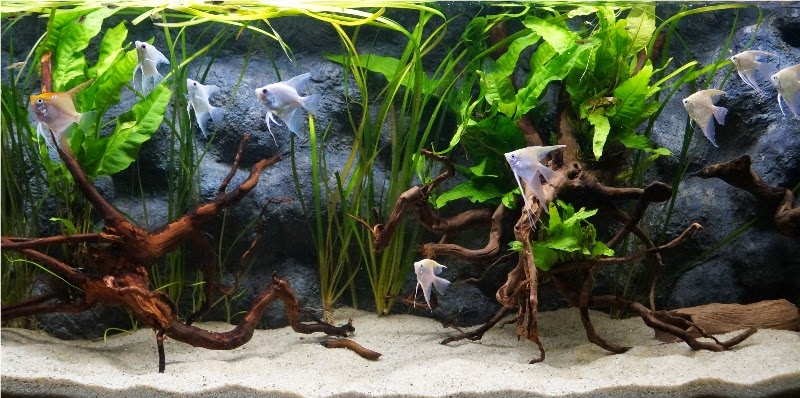
This is the process to making the background that is in my 5ft Angel tank:
5 foot Angel aquarium tank with custom DIY background

All pictures can be clicked on to enlarge.

What was used:
  • Styrofoam

  • Expanding foam
  • Breadknife
  • Sharp knife
  • Lighter
  • Silicone

  • Flyscreen mesh - For covering output and intake areas)
  • Paintbrushes - Various sizes
  • Water
  • Paper towel
  • Gloves
  • Render - approx. 18kg
  • Oxides - Brown & Black
  • Sealer - Clear pond sealer can be used, this will make the background inert. (not what I use on this one or later ones, but pond sealer will do the job)


*Important!

Write down the Render/Oxide/Water ratio!!!

The render dries quite a bit lighter than when its first applied, especially the Acrylic render I have linked in below, it dries white or very very close to.

Oxide colours can go a long way, small amounts and build to get a look you like.
Make sure to do regular tank fittings and remember adding layers of render adds height and width the the Background.

Expanding foam does just that, so don't get to boisterous with it lol Small and build!!

Be observant of making really hard to get to areas, once in the tank you have to try and seal these areas, and it can be difficult.
You need to work out what filtration you are having on the tank before you start, as intakes and output areas need to be factored in (the one above has filter, power head & heaters behind the BG.

Do not render areas that are going to be silicone to the glass to secure BG (back ground) into tank.
Do not think you wont need to silicone it in, foam is EXTREMELY buoyant!!
These backgrounds are designed to be permanent (you can get them out if need be, but the BG will NOT survive the process!)

Be sure you give the render time to cure, dependant on thickness, the thicker you make the layers, the longer curing time it takes.
The render MUST be fully cured (dry) before sealing!
Most pond sealers like to eat foam, so extra care is needed to just coat the render.
If the BG messes with you PH, you didn't seal it properly. It is messy to do, but a lot of fun lol.

On completion you have a totally one off BG that no one else can ever have :)

30th December 2013 - The basic foam work

Step 1 Styrofoam, DIY Aquarium Background


30th Dec 2013 - Expanding spray foam added

Step 2 Expanding spray foam, DIY Aquarium Background


3rd Jan 2014 - Tank fitting

Step 3 Tank fitting, DIY Aquarium Background


11th Jan 2014 - 1st coat of render done

1st coat of render done, DIY Aquarium Background


11th Jan 2014 - 2nd coat of render done

2nd coat of render done, DIY Aquarium Background


13th Jan 2014 - 3rd coat of render done

3rd coat of render done, DIY Aquarium Background


15th Jan 2014 - Highlighting done

Highlighting done, DIY Aquarium Background


24th Jan 2014 - Siliconed into tank

Siliconed into tank, DIY Aquarium Background


18th Mar 2014 - Joins done - Now I hit a glitch here, I didn't write down the render/oxide/water ratios and could not match the colour, so yep I have to give it a 4th coat and re-highlight it

Joins done, DIY Aquarium Background


24th Mar 2014 - tank out side ready to seal

tank out side ready to seal, DIY Aquarium Background


29th Mar 2014 - Tank fully sealed and ready to put back on stand

Tank fully sealed, DIY Aquarium Background


Material Resources:

I use this render:
Dunlop Acrylic Render

I have used this sealer:
Crommelin Pondsealer

Silicone I use:
Selleys Glass Silicone

Oxides:
Australian Builders Oxide Powder

All of the above is available at Bunnings Warehouse :)

*note above is for Australians

For USA/Canada:

Premium USDA Safe Aquarium Silicone

Pond Sealer

FURTHER SUGGESTED RESOURCES:


Freshwater Aquarium Care; Basics to Advanced


Aquarium Lighting Facts & Information


Why PUR Is More Important than PAR for Aquarium Lighting

A must read article for anyone wanting to move from basic aquarium lighting to more advanced.
It is noteworthy that optimal PUR lighting is not only important for planted or reef aquariums, but for overall health of "fish only" tanks and compliments other aspects of optimal fish care such as feeding and chemistry.


TMC Premium Fluidized Sand Bed Filters


Premium, second to NONE Aquarium Bio Filters, that with optional Oolitic Sand, also maintains essential aquarium calcium levels, alkalinity, & electrolytes that are important to ALL Marine life, Goldfish, African Cichlids, Livebearers & more


Aquarium Sponge Filters


Labels: , , ,